.webp)
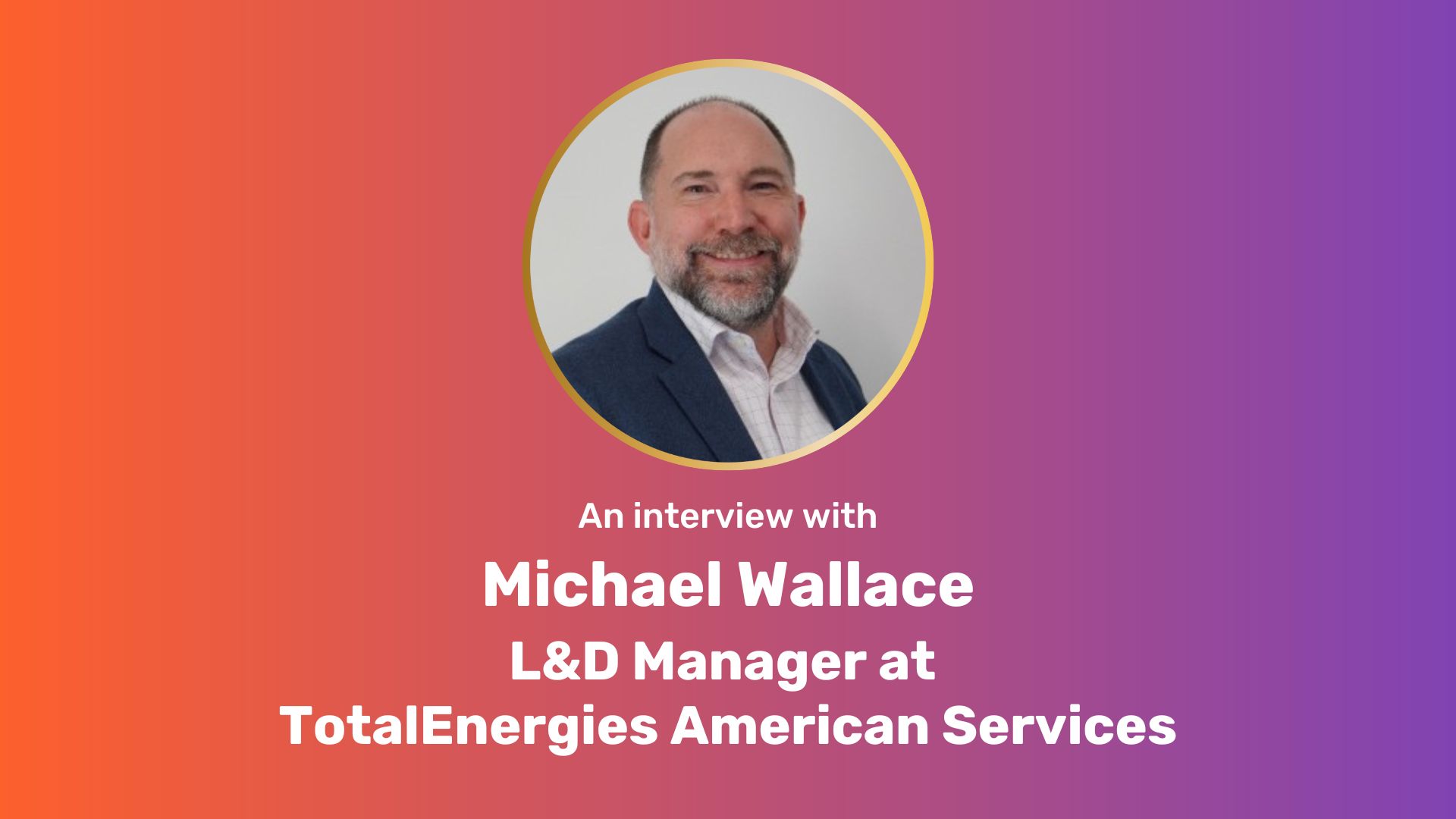
Insights from Michael Wallace, L&D Manager at TotalEnergies American Services
Electives Co-Founder Jason Lavender recently sat down with Michael Wallace, L&D Manager at TotalEnergies American Services, to learn about his unconventional path into L&D and the philosophy that's shaped his approach to build a grounded, quality-driven approach that blends structured training with real-world application.
Key topics covered:
- How to blend structured training with on-the-job learning
- Why adaptability is one of the most important skills right now
- How to make learning entertaining (without making it shallow)
- Why treating L&D like a craft drives better business outcomes
Treat L&D like a master craftsman
Perhaps the most powerful moment in the conversation comes when Michael shares his advice for anyone in L&D: treat it like a craft. Treat it with respect.
"I see L&D like being a master carpenter. A craftsman knows their tools, knows how to make the right cut, understands the materials they're working with. They don't just throw something together—they pay attention to the details because they know those details matter."
Michael shares a story from early in his career when he sent out a training needs analysis. He asked people how good they were at training others, and overwhelmingly, they said they were really good. Then he asked if they'd ever had formal train-the-trainer education. Very few had.
"Most people think they're really good at conveying knowledge, but they've never actually learned how to do it well. That realization taught me something important: you have to respect the craft. You have to be humble enough to admit you have a lot to learn."
This craftsman mindset shows up in everything—from how he designs a needs analysis to how he delivers a workshop to how he measures impact. Every detail matters. Every interaction is an opportunity to get better.
"Take the time to learn the intricacies. Whether it's the nuts and bolts of training design, understanding adult learning principles, or measuring effectiveness—learn it deeply. Respect the process." — Michael Wallace
For Michael, this approach extends beyond professional development. It's a life philosophy: whatever you do, do it mightily.
Blend structured training with on-the-job learning
Michael's approach challenges the either/or mentality that often dominates L&D discussions. The industry is moving toward a more holistic view—you need multiple approaches working together.
Different moments require different learning methods. Sometimes you need the expert instructor breaking down complex concepts. Other times, you need the manager coaching through a real challenge. Both matter.
This approach recognizes that learning happens in many ways, and the best L&D strategies don't force a choice between formal training and hands-on experience.
Adaptability is the skill that separates high performers
When Jason introduced the concept of "radical adaptability" from industry trends, Michael immediately connected with it.
"That is adaptability. That's a key component. It's about being a lifetime learner. That's what adaptability is—being able, excited, like, hey, I get to learn something new."
For Michael, adaptability is personal. It's his own coping skill when change happens.
"Oh, hey, I get to learn something new. That's probably the key component of adaptability, at least for me."
The learning function needs to model this. If L&D teams can't adapt quickly, how can they expect to help the rest of the organization navigate constant change?
Celebrate learning and growth, not just outcomes
Michael sees rewarding learning as part of building an adaptable culture. How can you reward people for learning? How can you celebrate when someone tries something new?
This philosophy extends to how he thinks about his own development and his team's. The focus is on growth and continuous improvement.
He sees this as part of L&D's role: not just delivering training, but shifting organizational culture toward continuous learning.
Start with the why — passion and purpose still matter
Despite the focus on business metrics and ROI, Michael hasn't lost sight of the human element. His passion for the work comes through clearly when he talks about why he does what he does.
"Start with the why. If you don't know why you're doing this work, if you're just checking boxes and rolling out training because someone told you to, you're not going to create real impact."
For Michael, the why is simple: he loves seeing people learn and grow. He loves watching someone struggle with a concept, then have that breakthrough moment when it clicks. He loves creating environments where collaboration happens naturally, where people actually want to help each other succeed.
This passion fuels the strategic thinking, the measurement, the continuous improvement. Without caring deeply about the work, you're just going through the motions.
Make learning entertaining (or people won't learn)
Michael is direct about the reality L&D professionals face today: our brains are being rewired by technology, especially our phones.
"My attention span, if even I'm watching television and I'm not entertained for the next 30 seconds, I'm ready to start scrolling on my phone. Our brains have been rewired."
Because of this shift, learning has to adapt.
"A good learning opportunity, workshop, has to somewhat be entertaining as well, has to be engaging, because I'm fighting against a rewired mind."
Modern learning means less technology, not more. Fewer slides. Fewer animations. Modern is less.
The goal? Creating moments that respect people's attention and keep them engaged.
L&D that works means blending craft with adaptability
Michael's approach mixes precision with flexibility. He rejects the false choice between structure and innovation in L&D—you need the craftsman's attention to detail and the learner's willingness to adapt.
Whether it's blending learning methods, building adaptability, celebrating growth or treating the work with deep respect, Michael shows how L&D can drive business impact. The requirement? Do the hard work and continuously improve your craft.




.jpeg)