.webp)
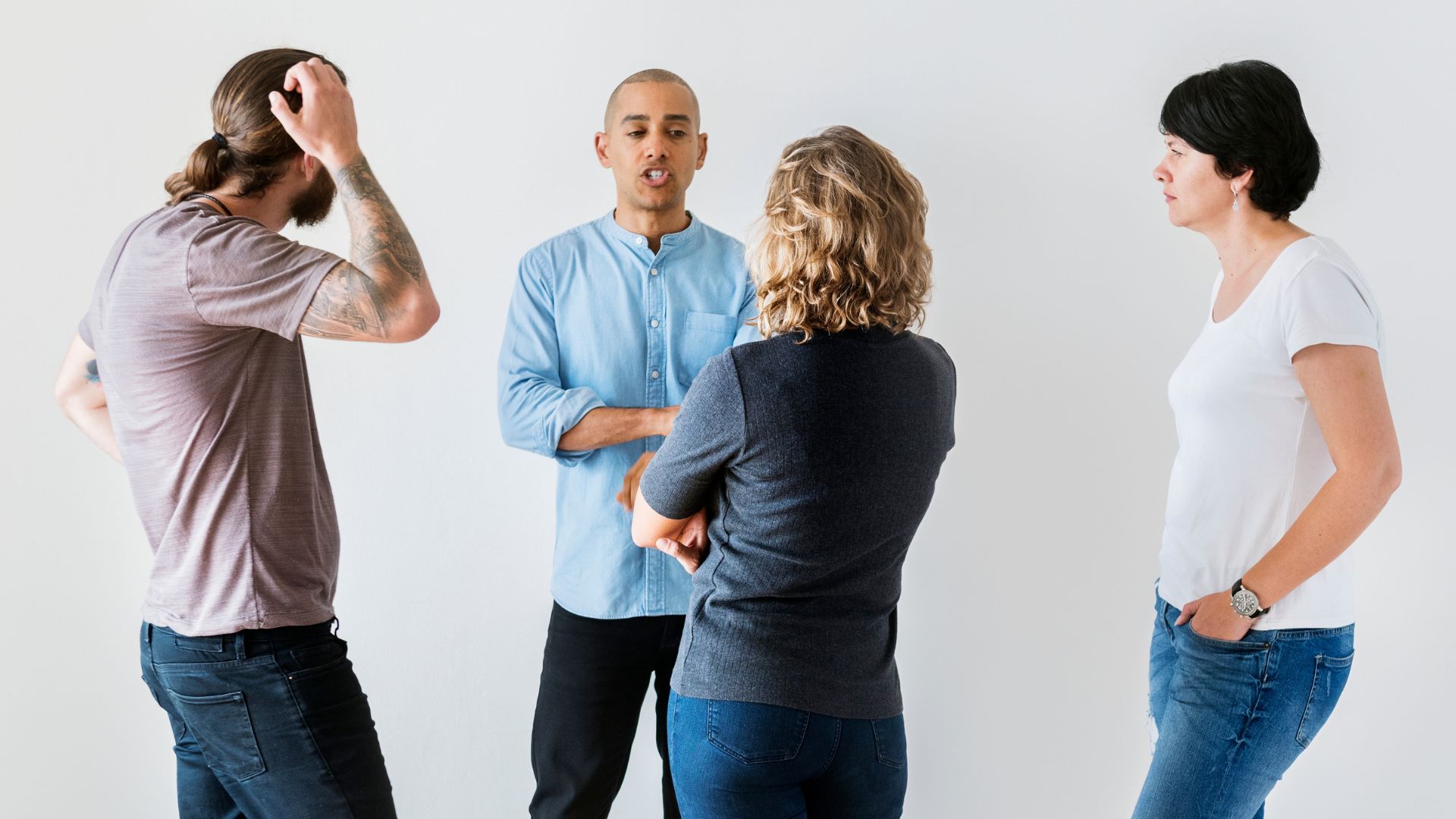
Creating an environment where employees feel comfortable expressing differing opinions without fear of conflict fosters innovation and growth.
Use this detailed guide to craft a training session featuring proven methodologies and interactive activities that will enhance healthy disagreement and effective conflict resolution:
1. Introduction to conflict management models
Explore essential conflict resolution frameworks to understand and manage different conflict styles effectively.
Objective
Introduce participants to fundamental conflict resolution frameworks to aid in identifying and understanding different conflict styles.
Activity
- Begin with the Thomas-Kilmann Conflict Mode Instrument (TKI) to help participants recognize their default conflict styles.
- Present scenarios demonstrating the effectiveness of each conflict style, supplemented by discussions led by organizational leaders or guests who share real-life examples.

2. Self-reflection and communication styles
Delve into how your communication styles influence conflict dynamics, enhancing your self-awareness and interaction strategies.
Objective
Enhance self-awareness among participants about their communication styles and their impact on conflicts.
Activity
- Employ the DiSC assessment to illuminate personal communication behaviors.
- Continue with self-reflection exercises, where participants document and review their conflict-related interactions over a week using a structured diary or spreadsheet.
- Encourage contemplation on questions such as "What if I'm wrong?" and "How would I advocate for the opposing side?"
3. Role-playing and scenario-based exercises
Engage in practical, scenario-based exercises to apply and refine your skills in handling disagreements constructively.
Objective
Enable participants to practice healthy disagreement in a controlled, supportive setting.
Activity
- Organize role-playing activities that mimic real-life disagreement scenarios pertinent to your workplace.
- Participants can employ debate club techniques to clearly articulate their points while respecting differing opinions, aiding in the practical application of theoretical knowledge.
4. Psychological safety workshop
Develop a supportive environment that encourages open dialogue and minimizes the fear of expressing differing viewpoints.
Objective
Establish a foundation of trust and safety that promotes open dialogue and diminishes the fear of negative repercussions from disagreeing.
Activity
- Host a workshop based on psychological safety.
- Explore and apply strategies for cultivating a culture where everyone feels secure expressing diverse views without risk of penalization.
5. Mission, vision + values alignment
Reinforce the significance of your organization's core principles, highlighting how healthy disagreements can align with and support these foundational elements to foster teamwork and innovation.
Objective
Remind participants of the overarching purpose and shared goals that unite them, encouraging a team-oriented approach to conflict.
Activity
- Conduct a session revisiting the organization’s mission, vision and values.
- Utilize this framework to discuss how healthy disagreements can align with and bolster these organizational pillars, enhancing collaboration.
6. Interactive group discussions
Cultivate a collaborative atmosphere through guided group discussions that challenge participants to employ constructive disagreement techniques to resolve conflicts effectively.
Objective
Foster open communication and collective problem-solving.
Activity
- Divide participants into small groups to discuss preselected topics that typically provoke disagreement.
- Guide them to use the constructive disagreement techniques discussed in the training to achieve consensus or agreeable compromises.
Additional considerations
Training is never one-size-fits-all. Address your organization's unique needs with tailored approaches and additional resources that enhance the learning experience and ensure its relevance and effectiveness.
- Inclusion of external partners: For a richer experience, consider collaborating with external learning providers like Electives for live, interactive sessions. These sessions, led by instructors with firsthand knowledge, can introduce new perspectives and innovative conflict-resolution strategies.
- Expand training to include additional topics: Emotional intelligence, communication skills, unconscious bias and collaboration are just a few of the many training topics that support a culture of healthy disagreements.
- Follow-up and reinforcement: Ensure learning endures through regular follow-up sessions, learning nudges and refreshers on critical concepts. Encourage managers to exemplify healthy disagreement behaviors and provide ongoing feedback.
- Feedback mechanism: Implement a system to collect participant feedback on the training’s effectiveness and areas for improvement. This feedback will assist in refining the training for future sessions.
This framework is designed to equip employees with the necessary tools and confidence to engage in constructive disagreements, ultimately fostering a more collaborative and innovative workplace culture.

%20(3).png)


.jpeg)
.jpeg)